Securing a mini excavator requires balancing machine weight against site access constraints across established Lauderdale neighborhoods. Working in historic corridors like Colee Hammock, Sailboat Bend, and Victoria…
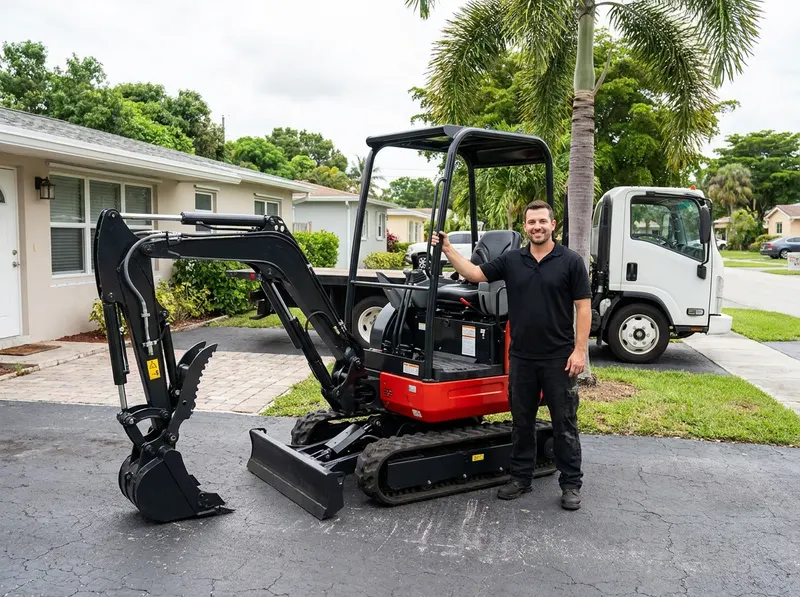
Securing a mini excavator requires balancing machine weight against site access constraints across established Lauderdale neighborhoods. Working in historic corridors like Colee Hammock, Sailboat Bend, and Victoria Park often means negotiating mature live oak canopies, overhead wires, and lot widths under 50 feet. For utility trenching, footing excavation, or drainage prep near the Tarpon River, an excavator under 4,000 pounds with a 39-inch retractable track width moves through pedestrian gates without removing structural fence posts. When deeper foundation excavation or canal-wall tieback clearing is required along Rio Vista, Harbordale, or Coral Ridge, stepping up to an 8,000 to 12,000-pound machine provides digging depths past 10 feet and breakout forces exceeding 6,000 foot-pounds. The operational trade-off remains ground pressure versus production: lighter units exert approximately 3.8 psi to protect turf and brick pavers, while heavier steel-track-pad or high-tonnage units speed bulk soil displacement at the risk of surface compaction.
Ground stability along south Florida coastal corridors presents unique soil profiles that dictate machine selection. Sandy subgrades near Fort Lauderdale Beach Park and Hugh Taylor Birch State Park lose traction under wheeled equipment; rubber-track excavators distribute machine mass to prevent sinking into loose aggregate. Navigating high groundwater levels in low-elevation communities like Imperial Point means trench walls slough rapidly, requiring hydraulic excavators equipped with 24-inch or 36-inch smooth ditching buckets to expedite clearing before subgrade water accumulates. Equipment staging in tight driveways requires strict protection; transport drivers drop equipment onto timber blocking rather than raw asphalt or decorative pavers to avoid point-load cracking.
Dispatching equipment from logistical staging hubs near Port Everglades and the Fort Lauderdale-Hollywood International Airport allows fast transit up US-1 and the 17th Street Causeway. A common misunderstanding in equipment rental involves fuel policies and attachment compatibility. Every machine ships full of clean off-road diesel and must be refueled prior to pickup to avoid market surcharges, and auxiliary hydraulic lines operate standard two-way attachments such as augers or hydraulic breakers. Reserving machine delivery begins with a route-clearance check to verify that street parking and staging locations along municipal right-of-ways comply with local Lauderdale staging codes.
Every job gets a firm, written price after a free on-site visit.
Tell us about your mini excavator rental job in Lauderdale and we'll send a clear, written quote, usually the same day.
 Granite Peak Dumpster Rental